 THUMB
THUMBThe Renta-Fence Blog · The Spring Dig-Out
The Spring Dig-Out: The Worst Chore on the Shoreline
There are two versions of you in the snow fence story. October-you spent a Saturday driving posts and stretching fence, saved a few hundred bucks doing it yourself, and felt pretty good about it. April-you is standing on the beach looking at a sand dune with little red slats poking out the top of it, holding a shovel, doing the math on how this happened.
Here's the part nobody tells you at the farm store: a snow fence that worked buries itself. That's not a failure — it's the whole mechanism. The fence slows the wind, the wind drops what it's carrying, and on a beach the wind carries sand all winter long, not just snow. The snow melts in March. The sand stays. By April, the bottom foot or two of your fence is inside a dune that the fence itself built, packed down by five months of freeze and thaw.
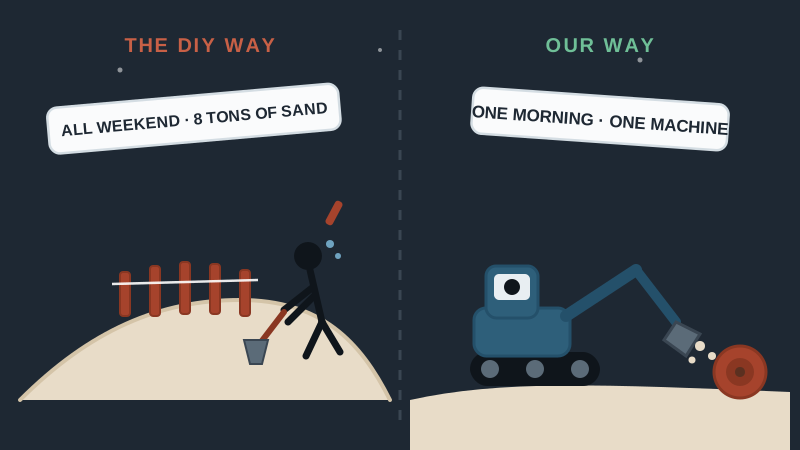
What digging it out by hand actually looks like
Let's be honest about the job, because the dune doesn't look like much from the deck.
- The sand is not beach sand anymore. Wet, compacted spring sand runs around a hundred pounds per cubic foot. A 100-foot fence buried eighteen inches deep, dug out on both sides wide enough to work, is somewhere between five and ten tons of material — moved twice, because it has to go somewhere and then it can't stay in a ridge on your beach.
- You can't just pull it. Wood-slat fence is lath woven on wire. Yank a buried fence with a truck and the wire pulls through, the slats snap, and now you own a hundred feet of expensive kindling that's still buried.
- The shovel has to respect the fabric. Every stroke near the fence line risks slicing the fence you're trying to save. So you dig a careful trench along both faces, by hand, in a cold wind coming off water that's still 38 degrees.
- The posts are their own fight. T-posts driven eighteen inches into pre-winter ground, now set in compacted sand, come out one at a time — rock, lift, swear, repeat.
- And then you do the install again in October — knowing, this time, exactly what April costs.
The usual result: most of a weekend, a wrecked back, a fence with a few sections torn anyway, and a pile of sand you still have to rake out. The fence you saved money installing charges interest every spring.
How we do it
We bring a mini-excavator and a crew that has done this before. The machine opens the dune along the fence line in minutes instead of hours, the fabric comes free intact, posts pull clean, and the fence gets rolled, tied, and either staged for fall or hauled away — your call. A job that eats a DIYer's weekend is usually one morning.
Pricing is metered and documented, so it's fair on both sides: before we dig, we measure how many feet of fence are actually buried and photograph it. Most dig-outs land between $500 and $900 ($400 minimum); a truly monstrous burial that takes the machine all day is quoted as a day job before we start. No surprises in either direction — you'll know the number before the bucket touches sand.
One honest note on timing: the April route fills first-come, and the machine is only on the shoreline for a few weeks. If your fence went under this winter, get on the list early.
Or — and hear us out — never dig again
Everything above is the strongest argument there is for the seasonal rental program, because rental customers simply never meet this problem:
- We install to minimize burial in the first place — fence set at the vegetation line, mounted high on sandy lots so the dune builds under the fabric instead of over it (and set on the sand where the job is catching it).
- Removal is included in the one seasonal price — install, takedown, summer storage, storm re-set, all of it.
- And when the lake wins anyway, your cost is capped in writing. If a rental fence buries, removal is metered the same fair way — measured with photos before digging — and the contract says you will never pay more than $750 per 200 feet, period. Compare that to what a bad DIY spring costs in either sweat or dig-out fees.
- Want zero variability? Add flat Dig-Out Protection at signing ($45–$295 a season depending on your lot's sand exposure) and burial is covered no matter what the winter does.
Buried fence? Tired of the shovel?
Send your address — we'll quote the dig-out from a look, or price the rental that means you never think about this again.