 THUMB
THUMBThe Renta-Fence Blog · The Simple Science
How a Snow Fence Works (It's Not What You Think)
Most people think a snow fence works like a wall. Snow flies at it, the fence stops it, done. That's not how it works at all. A snow fence is full of holes on purpose — and those holes are the whole trick.
Wind carries snow like a river carries sand
On a windy winter day, most blowing snow isn't falling from the sky. It's snow that already landed, getting picked up and pushed along the ground. It bounces and skips, mostly in the bottom two or three feet of air — about knee height.
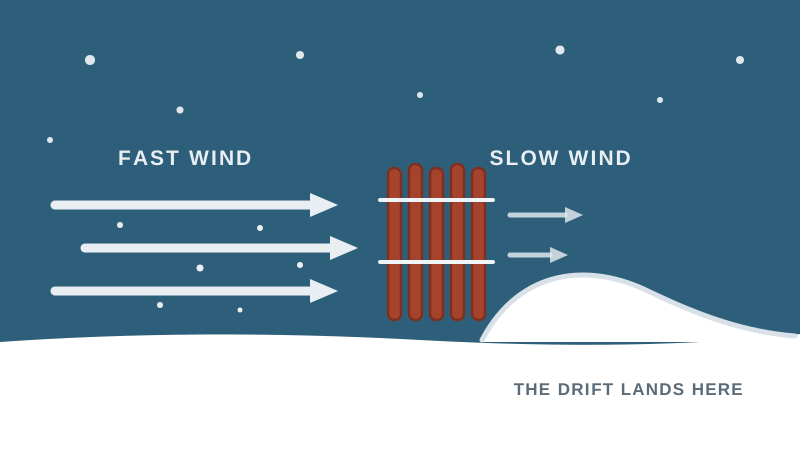
Here's the rule that explains everything: fast wind can carry snow, and slow wind can't. A fast river carries sand. When the river slows down, the sand sinks. Wind and snow work exactly the same way.
The fence slows the wind, and the snow falls down
When wind blows through a snow fence, the fence steals some of its speed. On the other side, the slower wind can't hold its snow anymore — so it drops it. The snow piles up in a long drift on the downwind side of the fence, right where we planned for it to land.
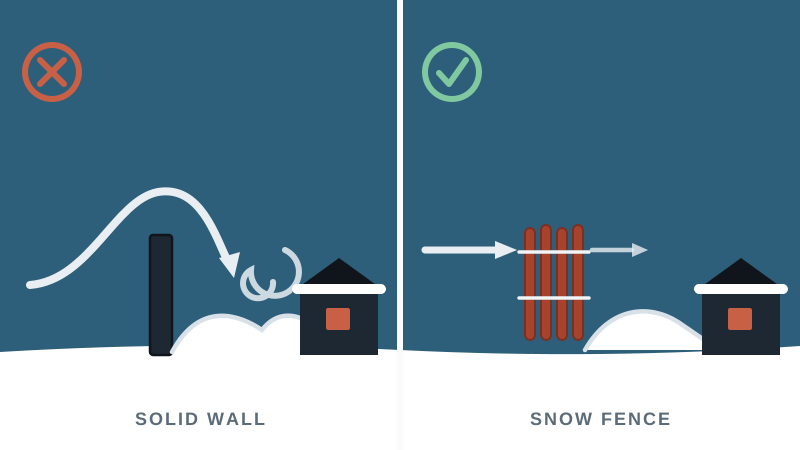
That's why a solid wall makes a lousy snow fence. Wind can't go through a wall, so it jumps over it, swirls, and dumps snow in weird places — sometimes right against the thing you wanted to protect. A good snow fence is about half open, so just enough wind passes through to lay the drift down flat and long, a safe distance away.
The drift is bigger than you'd guess
Scientists who study snow (it's a real job) have measured this for decades. A 4-foot snow fence can build a drift over 100 feet long on its downwind side. That's longer than two school buses parked end to end — all from one little fence.
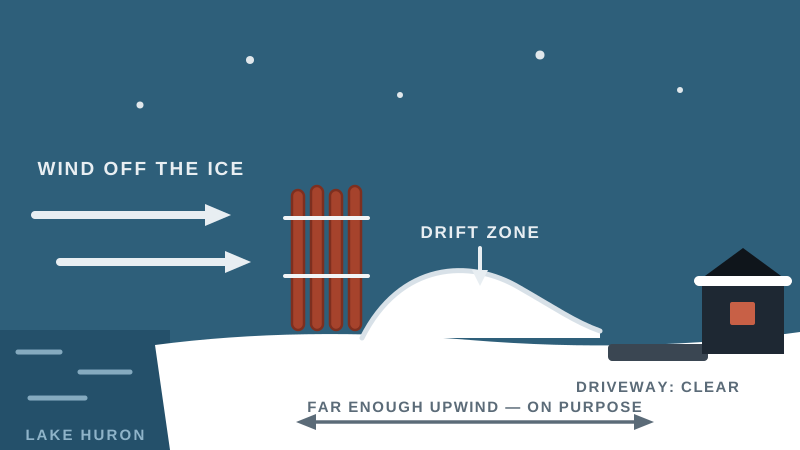
That's also the catch: the drift needs somewhere to go. Put the fence too close to your driveway, and you just built a snow-making machine pointed at your car. The fence has to sit far enough upwind that the whole drift lands in the yard, where nobody cares.
Why the lake makes it worse here
On the Lake Huron shoreline, winter wind comes off miles of open water and ice with nothing to slow it down. No trees, no hills, no buildings — your house is the first thing it hits. That's why shoreline lots from Caseville to Port Hope drift in so much worse than places one mile inland.
It also means the wind direction is different shore to shore. Northwest wind off the lake at Caseville is a different problem than field-blown snow at Harbor Beach. We place every fence line for the wind your shore actually gets — not a guess.
The three things that make a fence work
- Distance: far enough upwind that the drift lands in a safe zone.
- Openness: about half open, so the wind slows down instead of jumping over.
- A gap at the bottom: a few inches of space under the fence keeps the drift long and flat, and keeps the fence itself from getting buried and crushed.
Get those three right and the fence quietly does its job all winter. Get them wrong and it lies flat in December or builds a drift in the worst possible spot. That's the difference between buying a roll of fence and having a fence that works.
Want the drift to land in the right spot this winter?
We've already measured every shoreline lot in Huron County from the air. Send your address and we'll show you your fence line and your exact price.