 THUMB
THUMBThe Renta-Fence Blog · Materials & Methods
Wood or Poly? How We Pick Materials — and How We Install Them
All snow fence does the same job: slow the wind so the snow drops in a safe spot. But not all fence does that job equally well, and none of it works if it's installed wrong. Here's what we use, why, and exactly what happens on install day.
The two materials
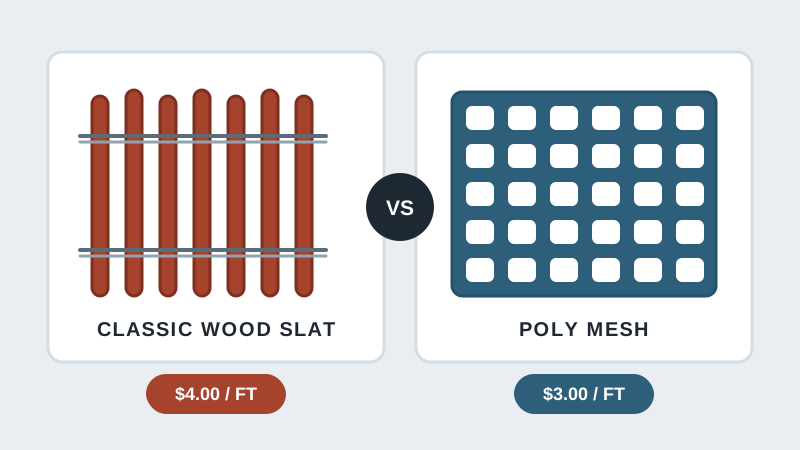
Classic wood slat. This is the red-brown fence you've seen along country roads your whole life — wooden slats woven together with twisted wire. It's our favorite for shoreline lots for three reasons. It's heavy enough to stand steady in lake wind. Its slats-and-gaps pattern is naturally about half open, which is right where a snow fence wants to be. And honestly, it looks like it belongs on a Michigan shoreline. Road commissions have trusted this exact design for close to a hundred years.
Poly mesh. The plastic version — lighter, less expensive, and it packs small. Good poly fence has the same half-open pattern and does real work. It's the budget-smart pick for long runs, second-row lots, and spots where looks matter less. It just doesn't shrug off a hard lake blow quite like wood, and cheap versions can sag by February — which is why we only run the heavier grade, tensioned properly.
How we install it (the details that matter)
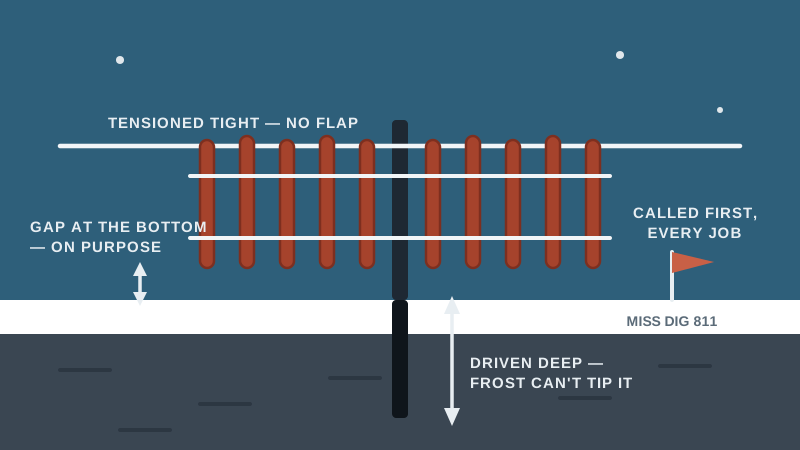
- First, the phone call you never see: we contact MISS DIG 811 before any posts go in. It's free, it's Michigan law, and it means nobody drives a steel post through a buried gas or power line.
- The line is planned, not guessed. Your fence line comes from the aerial measurement of your lot plus the prevailing winter wind for your stretch of shore — far enough upwind that the drift lands in the yard, not the driveway. On shoreline lots we also stay landward of the state's high-water mark, where the fence is legal and where the ground will actually hold a post.
- Steel T-posts, driven deep, every 8 feet. Frost and wind work together all winter to push a fence over. Post depth is the anchor that wins that fight.
- A gap at the bottom. We set the fence a few inches off the ground on purpose. It looks like sloppy work; it's the opposite. The gap keeps the drift long and flat and keeps the fence from being buried and crushed by its own snowbank.
- Tension, then tie-off. A loose fence flaps, and a flapping fence dies young. We pull the run tight, wire it to the posts, and brace the ends — that's what "still standing in February" comes down to.
- Photos when it's done. Most of our customers are already closed up for the season when we install. You get pictures the same day.
The timing window
Install season runs roughly September 15 to November 15 — after the summer season winds down, before the ground freezes hard. Once frost locks the ground, driving posts properly gets ugly, so the calendar really does fill in order. Spring takedown happens April into May, and the fence is gone before Memorial weekend. If a big mid-winter storm knocks a section loose, one courtesy re-set is included; extra service visits are $95.
Rent it or own it
Most folks rent: it's the lowest price and the fence disappears into our barn all summer. Some prefer to own their fence — we'll sell you the materials in year one and just do the labor every season after. Same crew, same install standard, your call.
Want to know what your lot needs?
Wood or poly, footage, and placement — your aerial proposal answers all three, with an exact price. One email, one conversation.